An excavation plan can look straightforward on a drawing because the drawing shows where the trench, utility, or other civil work needs to go. It does not necessarily show whether an excavator can maneuver comfortably beside it, where trucks will wait, where excavated material will go, or which parts of the property must remain accessible while the work is underway.
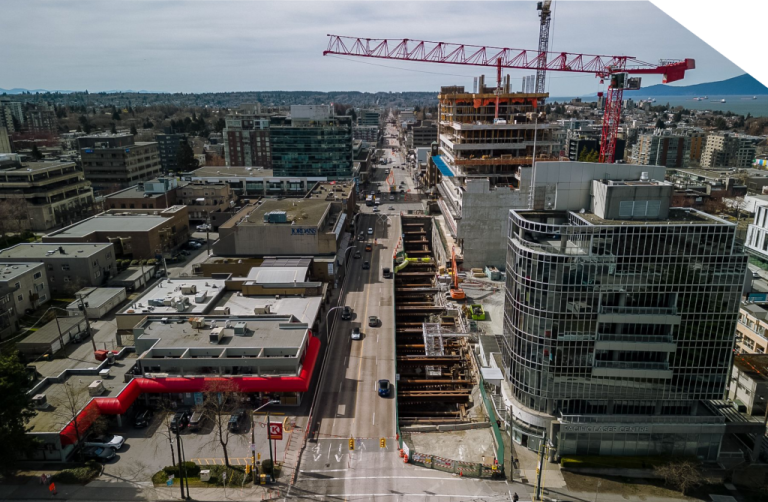
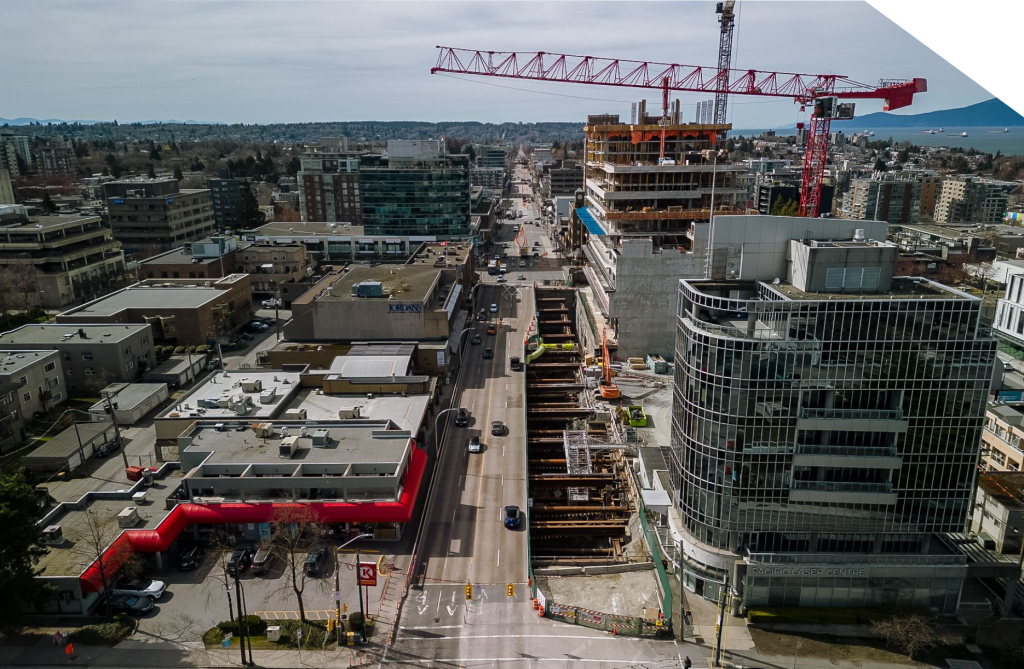
That is why we evaluate access before equipment is mobilized. On constrained commercial sites in Vancouver, the available working area can influence equipment selection, material handling, excavation sequencing, and even how much of a trench should be opened at one time. Solving those logistics early gives us a construction plan based on the site we actually have rather than an ideal amount of space that does not exist.
Civil Works In Vancouver Require More Than A Wide Enough Gate
A common mistake when assessing access is measuring the narrowest entrance and comparing it with the width of the excavator. That tells us whether the machine can pass through, but not whether it can work once it gets inside. We also need operating clearance, room to turn, space for the excavator to position itself relative to the trench, and a route that does not put buildings, curbs, overhead services, landscaping, or other infrastructure at unnecessary risk.
Consider a commercial property with a utility relocation planned along one side of the building. The obvious access point is a narrow lane between the building and the property line. A compact excavator can physically enter, so the route initially appears workable. Once we lay out the trench and account for the machine’s operating position, however, there is no longer enough space for a dump truck to reach the excavation.
Instead of repeatedly moving the excavator so trucks can enter, we can plan the work from the opposite end and establish a transfer point where excavated material is moved out without interfering with the digging operation. The trench itself has not changed, but the construction approach has. That distinction is important because site access problems are often operational rather than obvious physical barriers.
The Soil Coming Out Needs Somewhere To Go
Once the access route is established, the next question is material flow. Excavation creates volume quickly, and the material removed from a trench cannot simply accumulate wherever there happens to be open ground. Some excavated material may be appropriate for reuse, while other material may need to be removed and replaced with specified backfill.
On a large open property, there may be room to stockpile material away from the work. On a constrained site, that same strategy can consume the space needed for trucks, utility crews, or subsequent construction. We therefore determine how material will leave the excavation before digging begins, including where trucks can be loaded and whether temporary handling will be required between the trench and the haul vehicle.
There is also a sequencing issue that is easy to miss. A pile that is conveniently placed during excavation may occupy the exact location needed later for pipe, conduit, bedding material, or backfill deliveries. Planning where material goes according to the entire civil-work sequence prevents yesterday’s excavation from becoming tomorrow’s access obstruction.
What Must Keep Moving While We Excavate
Commercial civil work often happens on properties that cannot simply stop functioning. The available construction area may also be a delivery route, employee entrance, loading zone, fire access route, customer entrance, or connection between different parts of an industrial property. Before deciding how much ground to open, we need to know which movements cannot be interrupted.
We look at these requirements before establishing the excavation sequence:
- Business and delivery access: If trucks or suppliers must continue reaching the property, we identify when and where their routes intersect the work zone. Excavation may need to progress in sections rather than occupying the full route at once.
- Emergency access: Required emergency routes cannot become an afterthought once a trench is open. Their location can influence staging areas and the amount of site that can be occupied by equipment or materials.
- Utility crews: Excavation is frequently only preparation for another trade. Electrical, gas, water, sewage, or telecommunications crews need practical access to the exposed area, including room for their own equipment and materials.
- Inspections and testing: Certain stages must remain visible and accessible before they can be covered. Filling a site with stockpiles or opening additional excavation can make those required steps unnecessarily difficult.
- Backfill and restoration: We plan how material and equipment will return to the excavation after the utility work is complete. The route that worked for digging may no longer work if other portions of the property have since been occupied.
This changes excavation from a single activity into a sequence of site movements. The goal is not to reserve as much territory as possible for the excavator, but to allocate limited space to each stage when it is actually needed.
When Less Open Excavation Can Keep The Project Moving Faster
After access, material handling, and ongoing operations have been mapped, we can decide how the excavation itself should progress. On a constrained property, opening the maximum possible length of trench is not always the fastest approach. A long open excavation can divide the site, remove useful staging space, and make it harder for the crews following behind the excavator to reach their work.
In those conditions, we may divide the excavation into controlled sections. One portion can be excavated and prepared, the utility work completed and inspected, and the area backfilled before the next section is opened. This approach can preserve a usable route through the property while reducing the amount of open excavation that other trades have to navigate.
The tradeoff is that sectional work requires tighter coordination. Equipment may move more frequently, and each stage needs to be ready when the previous one finishes. But on a site where access is the limiting factor, productivity is not measured by how much soil can be removed in a day. It is measured by whether excavation, utility installation, inspection, backfilling, and restoration can continue without repeatedly blocking one another.
Contact JPD Contracting For Civil Works In Vancouver
If you are planning excavation, utility relocation, demolition, backfilling, or related civil works in Vancouver or the Lower Mainland, contact us at JPD Contracting before site logistics become a construction problem. We can review access, excavation requirements, material movement, and project sequencing as part of the overall plan. Click here to contact our team today and we’ll be glad to discuss your site and the civil work you need completed.